
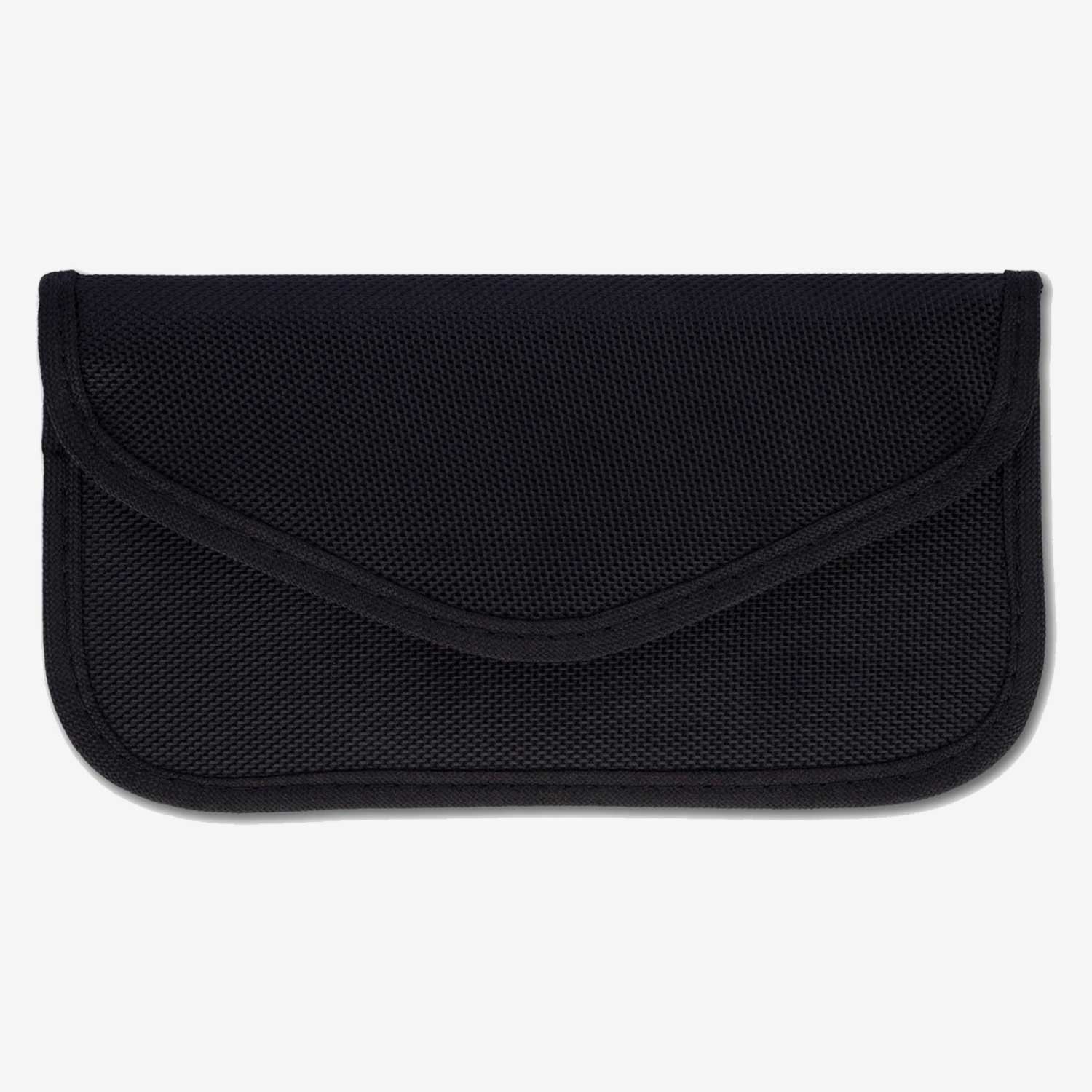
Why would you need a Faraday bag?
Your phone is a tracking device you pay for. It pings cell towers, connects to WiFi networks, and reports your GPS coordinates — constantly. Even "airplane mode" doesn't stop all signals. Some apps bypass it. Some phones ignore it.
In 2023, a New York Times investigation revealed that data brokers were selling precise location histories of millions of phones — including visits to abortion clinics, addiction treatment centres, and political rallies. The data wasn't hacked. It was collected legally, through apps people installed voluntarily.
A Faraday bag is the only way to guarantee your phone isn't transmitting. No software. No settings. Just physics.
How it works
A Faraday cage blocks electromagnetic signals by creating a conductive barrier around your device. Our bags use dual-layer copper-nickel mesh bonded to polyester backing — the same principle used to protect military electronics and hospital equipment.
When you seal your phone inside:
• GPS satellites can't locate you
• Cell towers can't ping your device
• WiFi and Bluetooth are completely blocked
• NFC and RFID signals can't reach your cards
• Remote exploits can't connect — even if malware is installed
No battery drain. No configuration. Works on any device, any operating system.
Who uses Faraday bags?
Journalists protecting sources. Lawyers in sensitive meetings. Executives worried about corporate espionage. Activists in countries where phones get people arrested. Travellers crossing borders with sensitive data. Anyone who's ever felt their phone was listening.
Also: anyone who owns a car with keyless entry. Relay attacks — where thieves amplify your key fob signal through walls to unlock and start your car — are now the most common method of vehicle theft in Europe. A Faraday pouch for your keys costs less than your insurance excess.
Specifications
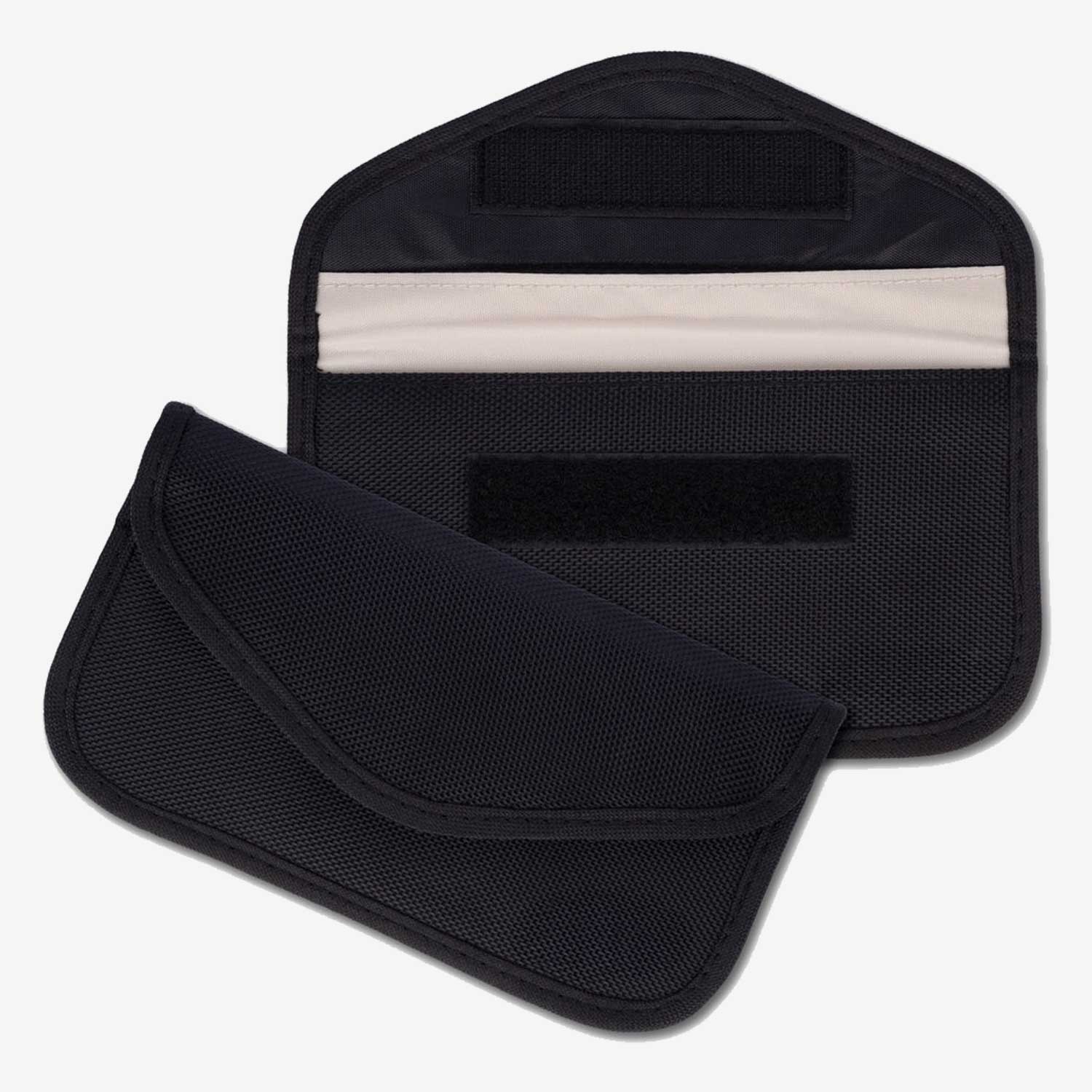
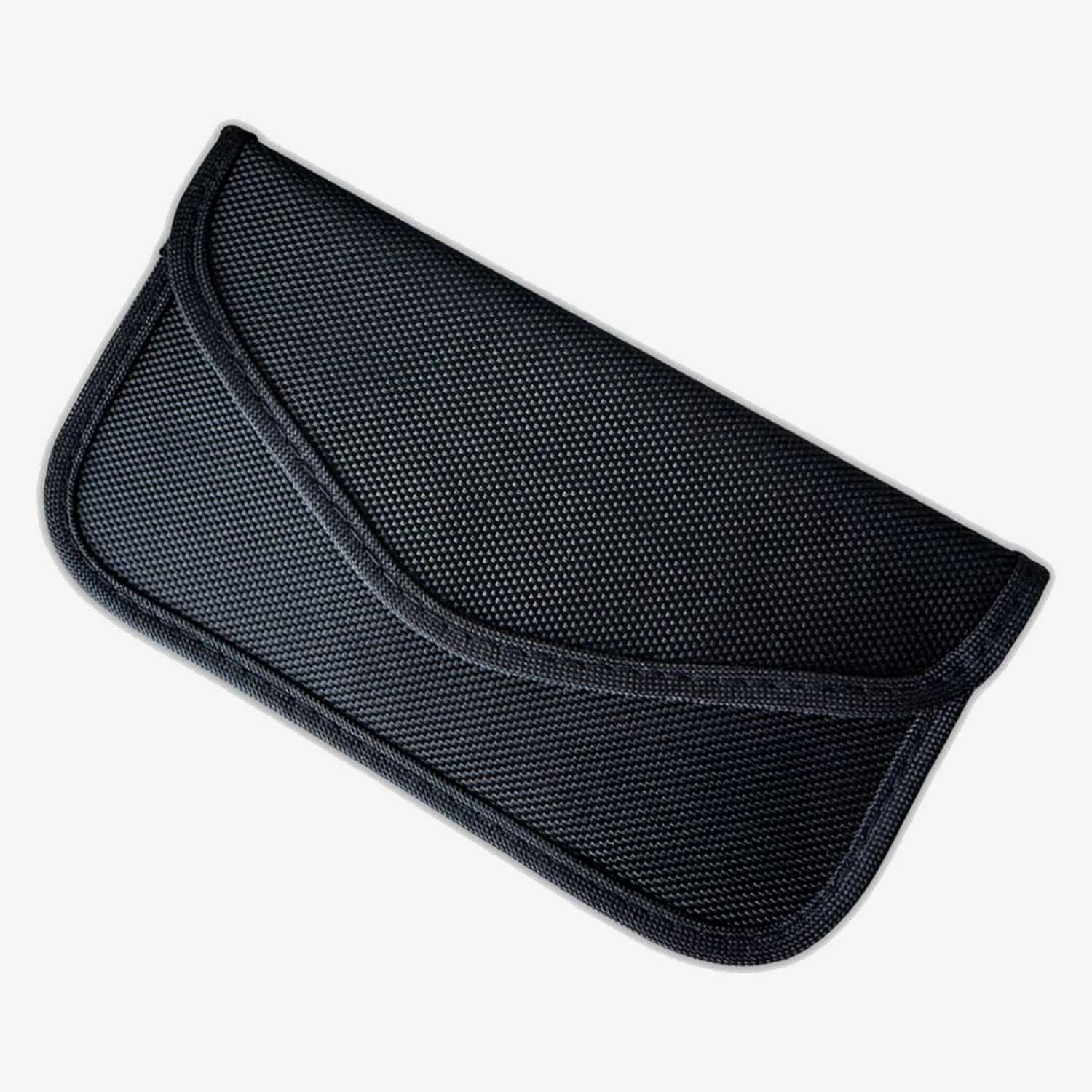
Shielding material Dual-layer copper-nickel meshBacking Polyester compositeSurface resistance < 0.05ΩShielding effectiveness > 85 dBOuter material Oxford fabric (abrasion-resistant)Closure Velcro with fold-over sealBlocked frequencies: GPS (L1/L2), WiFi (2.4GHz/5GHz), Bluetooth, NFC, RFID, 3G, 4G LTE, 5G, and key fob signals (315MHz/433MHz).
How to use it properly
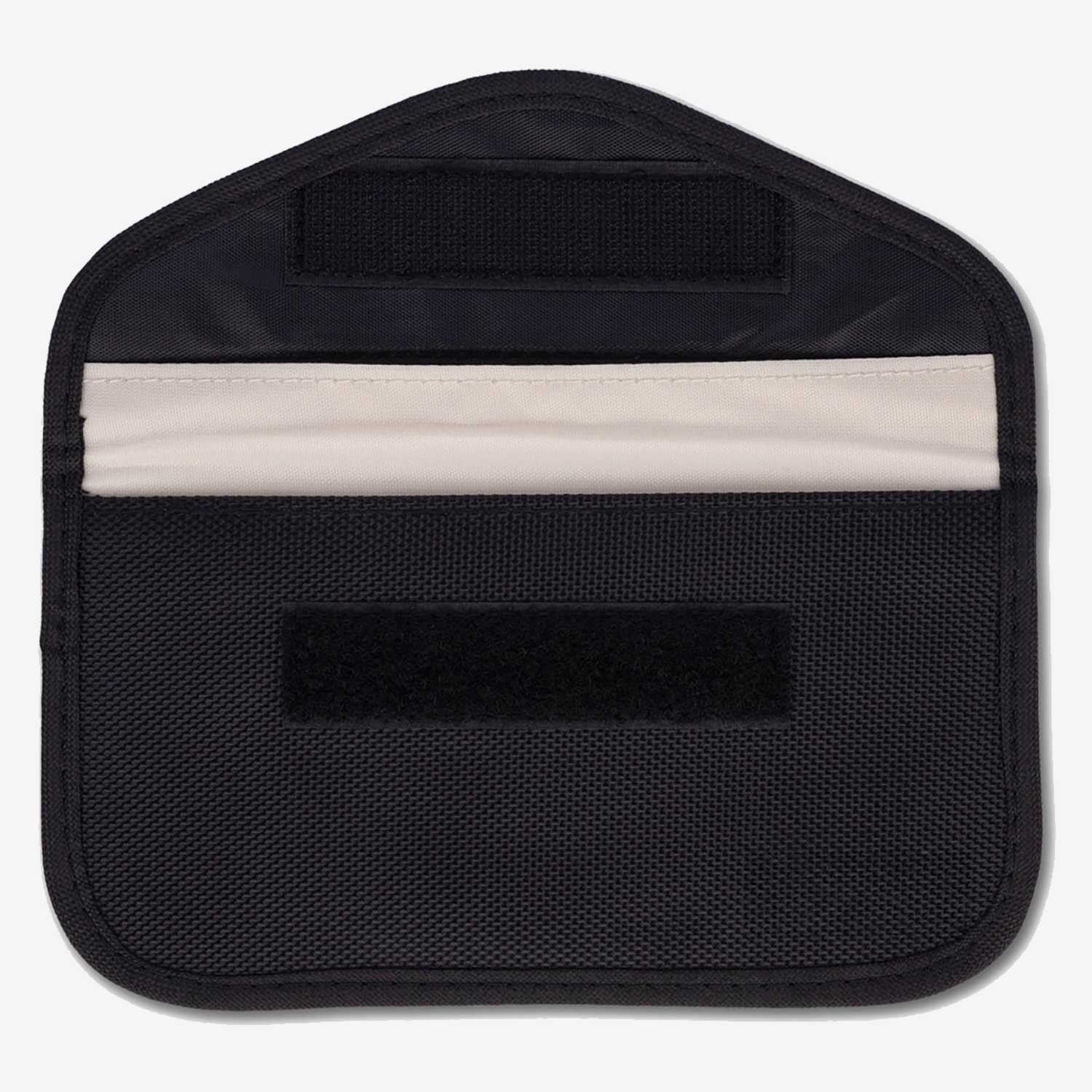
1. Place your device fully inside the inner Faraday compartment
2. Fold the shielded lining over the opening
3. Press the Velcro closure firmly — no gaps
That's it. To verify: try calling your phone. If it rings, the seal isn't complete. Refold and try again.
Important: Don't overstuff the bag. A loose seal means signal leakage. One phone per bag, or one key fob — not both crammed together.
When to use it
• Crossing borders — prevent remote extraction or location logging
• Sensitive meetings — no phones transmitting, no "accidentally" recorded conversations
• Storing car keys at home — stop relay theft while you sleep
• Protests or demonstrations — location data has been used to identify participants
• Travelling with a work phone — your company can track you even on vacation
• Anytime you want to disappear from the grid temporarily
Complete your privacy setup
A Faraday bag blocks signals when you need silence. A GrapheneOS phone gives you control when you need to communicate. Together, they cover both scenarios — connectivity on your terms, invisibility when required.
Recommended products:
• CryptPhone (GrapheneOS) — Control what transmits
• CryptHub Router — Encrypt what connects
• USB Data Blocker — Protect what charges